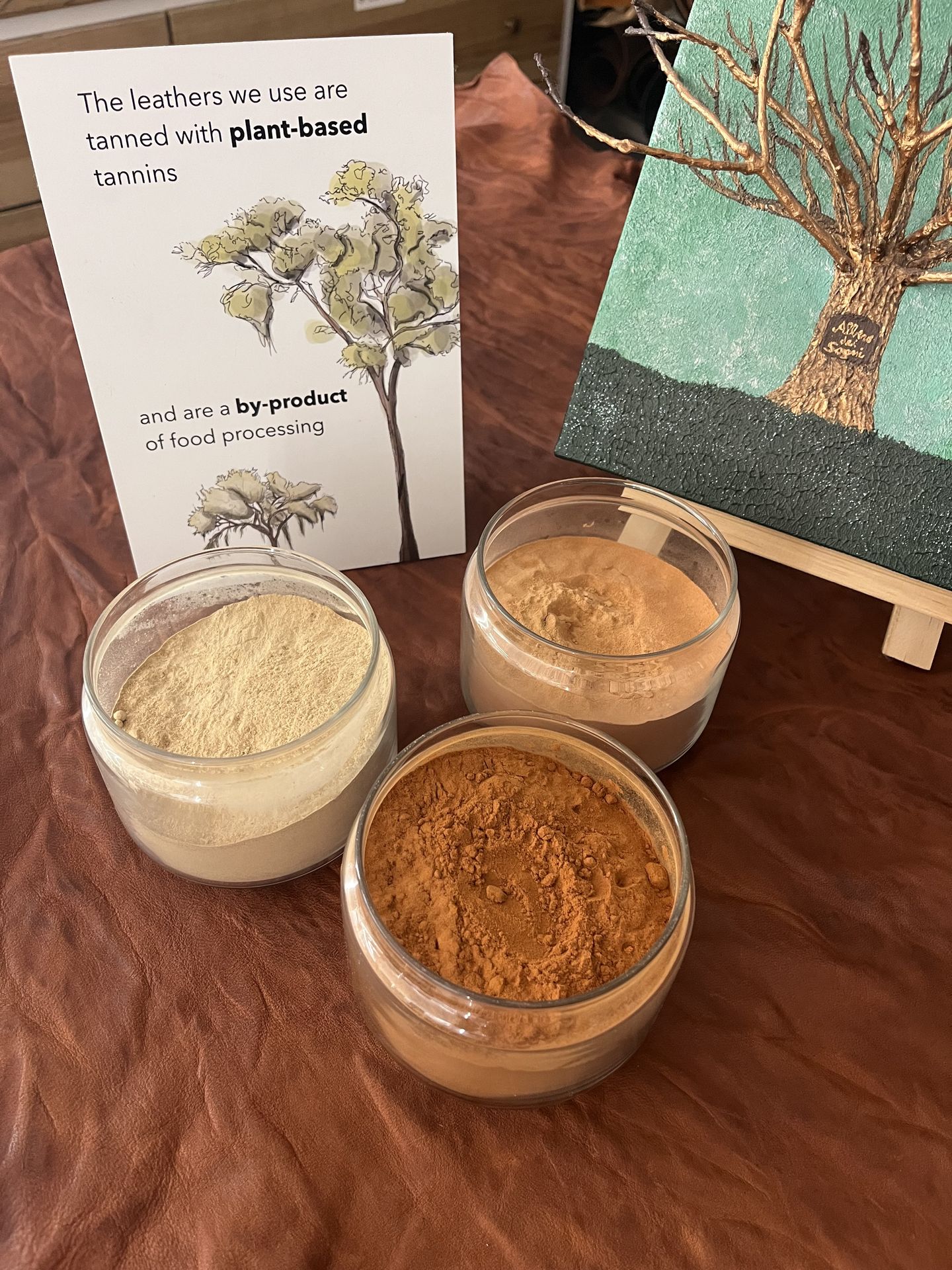
Wandering through the medieval streets of Florence, you feel as if you've stepped into a place frozen in time, where so much has been carefully preserved and kept true to its original form. We carry that same spirit of authenticity into everything we make: we source premium vegetable-tanned, full-grain leather from trusted local tanneries, and craft every piece by hand. For us, true craftsmanship begins with respect for tradition and for the origin of every material we work with.
To tell whether a leather product is truly handmade, look closely at the details: the edges, the stitching, the grain, the scent and the overall finish. Handmade pieces usually have smooth, burnished edges, hand-sewn saddle stitching that may vary slightly from one stitch to the next, a natural and irregular grain, a rich leather aroma, and small imperfections that make each piece unique. To be sure of authenticity, choose reputable artisans and sellers who specialize in handcrafted leather goods and can tell you where and how their products are made.

Faux leather and low-grade genuine leather are often both hidden beneath a plastic-like coating, yet only one of them actually comes from an animal hide.
Handmade leather goods usually have smooth, rounded edges that have been burnished by hand, polished with a tool until the fibers compress into a soft, natural sheen. Machine-made products, by contrast, tend to have sharp edges or edges sealed under a thick coating. If you look closely, you can spot the signs of hand finishing: burnishing, hand-applied edge dye, or a slightly fibrous texture on raw edges, which is a natural trait of real leather. Be wary of edges that look too perfect or plastic-like, as they often point to machine production or coated leather. Genuine leather also has a unique, irregular grain, with natural marks, creases and visible pores.
Steer clear of products with a perfectly uniform, repeating grain: it usually means the surface is synthetic or that the leather has been sanded down and coated with a PVC layer stamped with an artificial grain pattern.

- Feel: Real leather feels soft, supple and slightly textured. When you press it, it wrinkles and moves much like skin does. Faux leather tends to feel cold and plastic-like, and lacks the natural give of the real thing.
- Scent: Genuine leather has a rich, earthy, slightly woody aroma, quite different from the chemical or plastic smell of synthetic materials.
- Warmth: Hold it in your hand for a moment: real leather absorbs and holds your body heat, while faux leather stays cool to the touch.
- Stitching: Hand-sewn pieces often show tiny variations from stitch to stitch, a natural result of working by hand. These small details and imperfections are a sign of genuine craftsmanship and reflect the true handmade nature of the piece.
Choose reputable artisans that specialize in handcrafted leather goods and can be open about how and where their products are made, or offer certificates of authenticity.
Finally, remember that high-quality handmade leather is an investment. Full-grain pieces, especially those made entirely by hand, naturally cost more, reflecting the value of the materials and the time and skill that go into every step.
